Dan Lipranzer
Presumed InnocentDan Lipranzer is a homicide detective assigned to the Office of the Kindle County Prosecuting Attorney as a police liaison, but his most consequential role is personal as well as professional: he is Rusty Sabich’s closest friend, longtime investigative partner, and, at the end of the case, a skeptical reader of Rusty’s account of what happened. Lipranzer’s loyalty does not take the form of unquestioning belief. He shares information with Rusty, stands by him under pressure, and ultimately returns a missing piece of evidence, yet he also tells Rusty directly that he believes he killed Carolyn Polhemus. The friendship lasts because Lipranzer is prepared to follow evidence even when it turns against his friend.
Identity and Background
Lipranzer’s working life began in the police department. His father had been a watch commander in a West End precinct; after his father died, Lipranzer left college to take a place in the department that the narrator describes as a kind of departmental primogeniture. He later entered homicide and, by the time of Carolyn Polhemus’s murder, had been assigned to the prosecutor’s office through a Special Command arrangement.
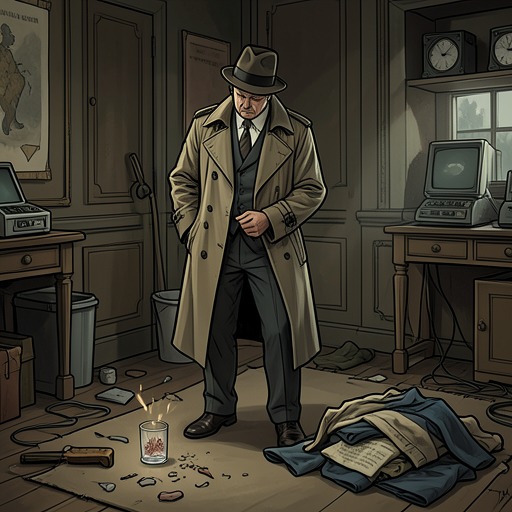
On paper, his job is to coordinate homicide investigations of special interest to the office. In practice, he works largely alone. His captain measures the assignment by the number of homicide arrests Lipranzer produces each year, while Lipranzer gathers information through personal contact with people the formal organization may not reach: people in bars and on loading docks, informants, reporters, and federal agents. Rusty regards him as a scholar of the underlife, someone whose range of knowledge helps account for his guarded, watchful manner.
Rusty’s description of Lipranzer at a college reunion makes the intimacy of their friendship unusually explicit. Asked to name his best friend and describe him, Rusty writes down Lipranzer: a small, slight cop with a distinctive hairstyle, heavy smoking habits, and a look Rusty associates with street-corner toughness. The details are affectionate without making Lipranzer easy to explain. Rusty says he does not know what they have in common, but admires him and trusts his ability. They met seven or eight years earlier, when Rusty entered the Violence Section and Lipranzer had just begun working in Homicide. Since then, they have worked a dozen cases together, though Rusty continues to find him mysterious and, at times, dangerous.
Work on Carolyn Polhemus’s Case
Lipranzer is waiting in Rusty’s office as the investigation begins, already positioned as a familiar presence in the prosecutor’s daily work. He brings the initial police paperwork, including the officers’ reports and the pathologist’s findings from Dr. Kumagai. Lipranzer gives Rusty the practical outline of the case: Carolyn died from a head injury, and the report does not identify the object used. His handling of the information is direct and unsentimental, in keeping with a detective accustomed to reducing a chaotic scene to the details that might establish what happened.
That method also makes him wary of an explanation that appears too simple. Early on, he says that the whole case feels strange and that something is missing. One of his first suspicions is that Carolyn may have been killed by someone she had prosecuted, an enduring possibility that haunts prosecutors who have sent defendants to prison. He does not present this as a conclusion; it is one hypothesis within the investigation’s repeated effort to establish who had a reason to kill her. His habit of keeping uncertainty active becomes important when evidence later points toward Rusty and, eventually, toward Barbara.
Lipranzer also tracks Carolyn’s telephone records. He tells Rusty that the records have come back and that investigators sought numbers she had called more than three times in the previous six months. Later, on Election Day, he calls from the office corridor with an early report that Nico Delia Guardia is projected to defeat Raymond Horgan by a substantial margin. The call places Lipranzer within the ordinary routines of Rusty’s professional world, but his work on the election quickly gives way to a discovery connected to the murder investigation.
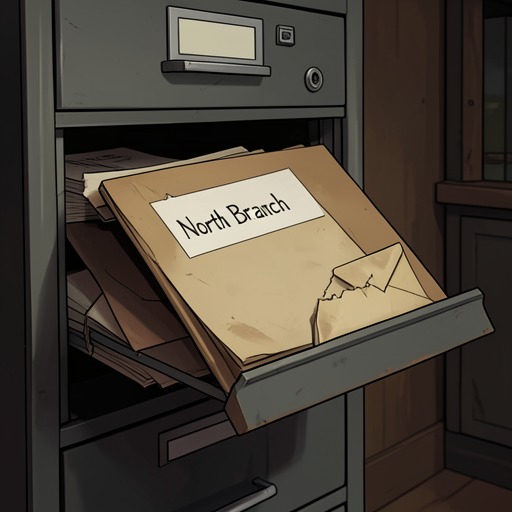
That evening, Lipranzer draws Rusty away from the noisy election gathering and tells him something is wrong at the Hall. He has gone to North Branch before five o’clock and found copies of court documents matching a complaint number missing from the 32nd District police station. The papers concern Leon Wells, whose public-indecency complaint had been dismissed by court order nine years earlier. Lipranzer points out that the bond order identifies Carolyn as Wells’s probation officer and gives her contact information. The old file links Carolyn to Wells and to the courthouse, opening a line of inquiry that had been concealed by a missing record. Lipranzer’s discovery is not simply a clue: it shows how the case depends on recovering an institutional paper trail that someone had failed to preserve in its expected place.
Friendship, Secrecy, and the Trial
During Rusty’s prosecution, the two friends maintain contact despite restrictions on speaking with one another. Their recurring calls, usually on Wednesday nights, have the quality of a routine they are not supposed to keep. Lipranzer does not need to identify himself for Rusty to recognize him. The calls establish a bond that continues across the formal separation between detective and accused, even as each must navigate the rules and risks surrounding the case.
At trial, Lipranzer appears as a prosecution witness. Nico keeps him apart from Rusty, and Lipranzer enters the courtroom in a suit he dislikes. Even so, he gives Rusty a wave and a wink as he comes through the door. Rusty experiences the gesture as a source of strength, a small sign of familiarity in a proceeding designed to place them on opposing sides. Lipranzer’s appearance also brings their shared investigative history into the courtroom, where their private understanding can no longer remain entirely private.
Under questioning, Lipranzer says Rusty never told him that he had a personal relationship with Carolyn. The answer is accurate as framed, but it does not settle what the two men understood about Rusty’s relationship with her. The distinction illustrates how courtroom questions can narrow what testimony establishes: Lipranzer answers the question asked, while the formal boundaries leave other knowledge outside the answer. Nico also elicits that Rusty told Lipranzer not to collect the telephone records from Rusty’s home, and that Lipranzer had to remind him to request computer analysis of fingerprints found on the glass and elsewhere in Carolyn’s apartment. These details expose lapses and raise suspicion without, by themselves, explaining them.
Lipranzer’s manner on the stand reflects the tension between professional testimony and personal allegiance. He is prepared to answer truthfully, but Rusty believes he is also waiting for an opportunity to challenge Nico. When Nico asks whether Lipranzer is the city police officer least likely to suspect Rusty of murder, Lipranzer rejects the premise in a way that makes his personal feeling unmistakable: he would never believe it. The testimony supports Rusty, but it is not a denial that Lipranzer has examined the case. His certainty in court coexists with the questions he later asks in private.
After testifying, Lipranzer tells Rusty that a captain warned him he could be sent to walk a beat alone in the North End if he mishandled his testimony. The threat shows that Lipranzer’s position is not protected by friendship or by his witness status. He nonetheless appeared and answered. When he later calls Rusty to ask how he did, the exchange is familiar and joking, but Rusty admits that praise is easier than telling him the whole truth. Their intimacy does not remove the pressure surrounding the case; it gives the pressure a personal cost.
The Missing Glass and a Revised Theory
After the trial, Lipranzer visits Rusty’s home after midnight, arriving while Rusty and Barbara are together and cautiously hopeful about the case’s possible dismissal. His visit leads to the return of Carolyn’s bar glass, which had gone missing during the trial. Lipranzer has wrapped it in a small box and evidence tape. He burns the evidence envelope and hands the glass to Rusty, who can see the blue ninhydrin residue and three partial prints. The object brings the trial’s dispute over missing evidence back into the room, while Lipranzer’s destruction of the envelope complicates the meaning of his act: he returns the glass, but does not preserve its packaging for an official chain of custody.
When Rusty asks why he took the evidence, Lipranzer does not offer a purely protective explanation. He tells Rusty that he believes Rusty killed Carolyn. The blunt accusation is a defining turn in their relationship: Lipranzer’s loyalty has not shielded Rusty from his own assessment of the evidence. He has considered the missing glass and the handling of the investigation as matters requiring explanation, not merely as an opportunity to prove that his friend is innocent.
The conversation then shifts from accusation to a competing theory. Lipranzer argues that Barbara wanted Carolyn dead and Rusty imprisoned. He points to the risks in the apparent setup: the telephone records could connect a call to the Sabich home, investigators could compare fibers and fingerprints, and the semen evidence could be examined more closely than Barbara may have anticipated. He also reasons that Barbara might have expected the homicide assignment to go to an investigator who knew Rusty well enough to recognize signs of a frame. In this account, Rusty’s involvement in the case disrupts her plan because he takes over the investigation rather than remaining a distant target of suspicion.
Lipranzer’s theory depends on how he reads the trail Barbara may have left and on what he believes she intended. He challenges Rusty’s tendency to take Barbara’s later remorse at face value, asking what she could be expected to say after Rusty had survived the prosecution. His alternative is severe: Barbara may have been sorry because the consequences became real, not because she had never meant to place Rusty in danger. Lipranzer does not treat remorse as proof that the original plan was innocent.
Loyalty Without Certainty
Rusty answers that he believes Barbara killed Carolyn and was sorry, and that telling the truth would not have helped him. He softly strikes Lipranzer’s shoulder as he says it, a restrained gesture that acknowledges both the accusation and their continued closeness. Lipranzer had first told him he believed he was the killer; now he has heard Rusty’s account and challenged its most comforting part without severing their friendship.
Lipranzer’s role in the ending is therefore more complex than that of a loyal detective who rescues an innocent friend. He discovers a crucial old file, gives testimony that supports Rusty while revealing damaging investigative omissions, returns the missing glass, and then offers a theory that places Barbara behind the crime and the attempted framing. Yet the final interpretation belongs to a conversation between two men who recognize that evidence and private knowledge do not produce a complete public resolution. Lipranzer remains both friend and investigator: close enough to know Rusty’s habits, independent enough to suspect him, and candid enough to say that surviving the prosecution does not settle who committed the murder.